

Sunday, December 24, 2017

Friday, December 22, 2017
Does China have an Immense Generation Gap?
China and its immense generation gap


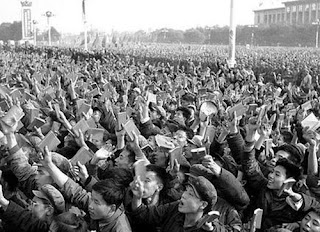


I've heard so many stories from friends, family and clients of the ravages of the Cultural Revolution during that time.


The Industrial Revolution spanned over 100 years in the United States. In China, it took place in less than 40 years. So for Americans, it's like having your grandparents as your parents. That's how fast China has changed. In 'The Beijing Youths', I delve into the generation gap occurring between Simon Wang and his son Greg and the conflict that carries throughout the book.
In the 1960's and 70's, China was gripped in the Cultural Revolution or its Dark Ages. The country was ruled by Chairman Mao Tse Tung. He was a ruthless dictator that strived to eradicate the class inequalities of generations before and crush any signs of capitalism or the bourgeois class. In its place, he instituted socialism with "Chinese Characters" where citizens were required to be indoctrinated in widespread communal rural living. He hoped to level the playing field for everyone by having them work in the country fields but the system failed. He even developed 'The Little Red Book' where he cites his own quotes for civilians to recant. If one was caught not memorizing his ideologies or having the book handy, they were punished. He cut off China from the rest of the world by controlling the media, censoring mail and correspondence with the outside world and making its citizens prisoners of their own country.


Chairman Mao's 'Little Red Book'
In the process were years of poverty, blood shed, brutality and violence from the Red Guards that wielded their ruthless power onto the people and famine that killed over 60 million people. An ideaology to purify their generation from the capitalist and money grubbing greedy past failed and massacred many. At the end, many believed that the Cultural Revolution was a social movement that benefited a few in Beijing including Mao at the cost of millions throughout the country. After ten years of bloodshed, Mao and his co-conspirators also known as the 'Gang of Four' that included his last wife were outsted in a publicly humiliating court trial where they were thrown in jail. The people suffered enough.

Chairman Mao Tse Tung

China's Cultural Revolution or the Dark Ages

Quoting the Little Red Book

Allegiance to Mao and his Little Red Book

Burning of precious artifacts that often included books, jewelry and anything of personal wealth

Public humiliation of anyone accused of being a capitalist, an entrepreneur, an artist, a teacher or anyone that went against the Mao regime or classified as dissidents. Punishments would sometimes mean brutal beatings, cutting off of body parts, being buried alive or thrown in labor camps, working in freezing temperatures with no clothes on.
From their stories, I notice the distinct vast generation gap between the parents and their children today. China remains a communist country but it is brimming with modernism in every facet of an urban metroplis that was achieved at lightning speed and surpasses many sophisticated cities around the world today. China is a very different country today than what many perceive.
Parents in their 40-60's remember vividly the Cultural Revolution since many of them were children when it occurred. Yet, they thrived beyond the rubbles of poverty and dispair through sheer hard work and tenacity and rose to success. The industrial elite we see today are actually first generational wealth and that is quite commendable. Like Jack Ma, the founder of Alibaba and Wang Jialin, founder of Dalian Wanda Group. They spent their youth in the Cultural Revolution and had very humble beginnings. They didn't have wealthy parents like many of our CEO's or billionaires where the wealth was passed on.


Their education level might be sketchy since Chairman Mao shut down the school system so he can institute his ideologies. Healthcare was meager and scarce so many are shorter, have stained teeth, have leathery skin, lesions, scars and other setbacks from not having access to healthcare during that time. Their hands bear scars from toiling away in the fields. Many drank dirty water and consumed unsanitary food which affected their health.


Jack Ma and his brother and sister during the Cultural Revolution


Wang Jianlin in the far right, joined the Red Army during the Cultural Revolution
Their education level might be sketchy since Chairman Mao shut down the school system so he can institute his ideologies. Healthcare was meager and scarce so many are shorter, have stained teeth, have leathery skin, lesions, scars and other setbacks from not having access to healthcare during that time. Their hands bear scars from toiling away in the fields. Many drank dirty water and consumed unsanitary food which affected their health.
China today has plenty of access to healthcare, food supply, education and advanced infrastructure system. Therefore, the children today are taller and healthier looking. Their skin is lighter and supple, head full of hair. They can eat anything they want as there are culinary delights from worldwide in every corner. China is also the largest recipient of every technological innovation in the world. So the children have the latest gadgets and technology when just a generation before, their parents were watching a black and white TV that was shared with several people in their village. These privileged children do not have any idea about what their parents went through, other than what they read about in books about the Cultural Revolution. Being the children of one child policies, they also received all the privileges and luxuries as the only child. They are the new China.


China's Hipsters


This is the generation gap that is showcased in 'The Beijing Youths'. I illustrate the vast difference between Simon as a young boy and his son at about the same age. Will they be able to bridge that gap or will it tear the family apart?
Thursday, December 14, 2017
Thank you for enjoying my books!
Thank you Pauline Sun for buying and enjoying my books. I am truly grateful.

Sunday, December 3, 2017

Wednesday, November 29, 2017
Wierd Chinese Eats or Nutritional Medicine?
The world eats a wide variety of food and sometimes they are strange to someone in the world. The Chinese definitely have their share! When you have over 5,000 years in history, one can only imagine the variety of things the Chinese picked up along the way that are considered edible or delicacies. Even more so when the country has seen its episodic moments of famine in history and relied on non-traditional sources for protein and nutrients in order to survive. Sometimes a trip into a Chinese supermarket or even a traditional medicine store in the "Asian" parts of town is like watching an episode of "Fear Factor".
1. Grass Jelly Drink


2. Chrysanthemum tea drink


3. Birds Nest Drink


4. Bird's Nest Soup

Birds Nest Soup
5. Traditional Herbal Medicine
In Book 1 or The Beijing Family, Grandma Moh makes traditional Chinese medicinal tea for Kara Chan. She thought she was drinking roots and herbs. Unbeknownst to her, she is drinking tea made of ox penis!

In traditional Chinese medicine, ox penis is believed to increase one's virility, energy and sexual prowess
6. Chicken Feet


In The Beijing Family book series, Grandma Moh unleashes some pretty wild Chinese fare including her practice of traditional Chinese medicine that can be sometimes shocking. In The Beijing Youths or Book 2 of The Beijing Family book series, Grandma Moh makes lunch for her grandson, Greg and his American friends. His friend unknowingly thought they were about to experience the common everyday beef and broccoli and orange chicken dishes at their local Chinese eateries. Oh no! Little do they know, they are about to be treated to some of the most bizarre and outlandish Chinese food! Greg and his American friends were thirsty, so they go to the fridge to find drinks. They were looking for bottled water, sodas and ice tea and instead, they find strange Chinese beverages. Some say that these wierd drinks derived from fruits and vegetables and not laden with sugar like Western soft drinks. But sometimes, maybe a good Sprite may be more appetizing. You be the judge!
Here are a few of the examples:
Here are a few of the examples:
1. Grass Jelly Drink
Grass Jelly Drink
What the heck is a grass jelly drink? Grass like in the green stuff that grows on lawns? And now it's in jelly form for a drink? Oh hell NO! Is this what the Chinese do to leftover cut grass? Actually grass jelly is made from boiling aged and slightly oxidized grass, but it's the stalks and leaves of Mesona Chinesis, a member of the mint family. After cooling the liquid to a jelly-like black consistency, this jelly can be cut into cubes or other forms and mixed with sugar or syrup to make drinks or dessert. I've had grass jelly many times, especially in my boba drinks, usually enjoyed as sweet beverages or dessert.
Grass Jelly mixed with fruits
Grass Jelly in almond or coconut milk and syrup or sugar
Chrysanthemum tea drink
One of Greg's American friends is shocked to see flower petals in a beverage! He couldn't even pronounce it. He asks, "What's a Chrys....an....whatever?"
The Chinese medicinal practice includes the use of chrysanthemums as a major part of the treatment. The Chinese knew that a soothing cup of warm golden brown Chrysanthemum tea has remarkable health benefits with high potency. Chrysanthemum tea has high amount of B carotene which are present in the yellow part of the fruit. The B carotene is converted in Vitamin A in the liver. This kind of Vitamin A is helpful in treating skin problems and increasing the immunity power. It also helps in postponing the aging process and age related blindness. Drinking Chrysanthemum tea helps in providing relief in sore throat, redness in the eyes, itchiness in the eyes, dryness in the eyes and dark spots in the eye area. It makes the lungs strong and helps in providing relief in respiratory problems such as shortness of breath. Chrysanthemum tea is good for the detoxification of the liver and for lowering cholesterol levels.
Birds Nest Drink
Greg and his friends then wander upon birds' nest drinks. One of Greg's American friends, Tevin, asks, 'Is there a bird in here?' Then he shakes the can anticipating a chirping sound. Yes, this drink is made from a nest from the swiftlet bird. Edible birds' nests are among the most expensive animal products consumed by humans, with an average nest selling for $2,500 per kilogram for end consumers in Asia. The nests have been used in Chinese cooking for over 400 years, most often as bird's nest soup. The white nests and the red nests are supposedly rich in nutrients, which are traditionally believed to provide health benefits, such as aiding digestion, raising libido, improving the voice, alleviating asthma, improving focus, and an overall benefit to the immune system. One interesting ingredient is that the swiftlet's bird nest is cemented by the usage of saliva from the swiflet bird. So this drink and the soup commonly served in Chinese restaurants have swiftlet's saliva.
This is what the drink looks like mixed with white fungus which is a commonly used thickening agent:
4. Bird's Nest Soup
Birds Nest Soup
Bird's Nest Soup is a gelatinous mix of chicken broth and swiftlet's, which is a type of bird and its saliva. Yes you heard me right. You are eating bird saliva! Swiftlets make their nests from saliva and each year, after the bird has left the nest, it's harvested and added to the soup, which is famed for its health benefits. This Chinese delicacy contains one of the most expensive animal products that humans consume. A kilogram of nests can cost anywhere from $2,000 to $10,000 USD> The swiftlet's nest is considered to have considerable health benefits, which justify the steep price of the soup ($30 to $100) and the nests themselves.
5. Traditional Herbal Medicine
In Book 1 or The Beijing Family, Grandma Moh makes traditional Chinese medicinal tea for Kara Chan. She thought she was drinking roots and herbs. Unbeknownst to her, she is drinking tea made of ox penis!
Ox penis sold in a local street market
In traditional Chinese medicine, ox penis is believed to increase one's virility, energy and sexual prowess
6. Chicken Feet
I often see chicken feet at dim sum restaurants. Every time, I just simply cringe. I just don't think feet of any animal should be considered edible considering that they are used for walking on the ground, brimming with bacteria and germs. All I can think about is the trash that I would be eating along with the feet that touched them. My father loves chicken feet despite contending with them being bony and bristly.
7. Century Egg

Century Egg
Century egg or pidan is a delicacy by preserving duck, chicken or quail eggs in a mixture of clay, ash, salt, quicklime and rice hulls for several weeks to a few months. Some historians say that this practice goes back to the Ming dynasty as a way to preserve food without refrigeration. I've had this a few times. It's salty and the eggs have a potent ammonia taste to it.
That's it for now. When I find more strange eats, I will post more here....Thanks for reading this blog.
Sunday, November 19, 2017
Feeling grateful....
Thank you Karo C. Pei for buying my entire book series and posting the photo on Facebook. I am feeling so grateful.

Thursday, November 9, 2017

Subscribe to:
Posts (Atom)